The Complete Vegas Transportation Guide 2026: Airport to Strip + Best Ways to Get Around
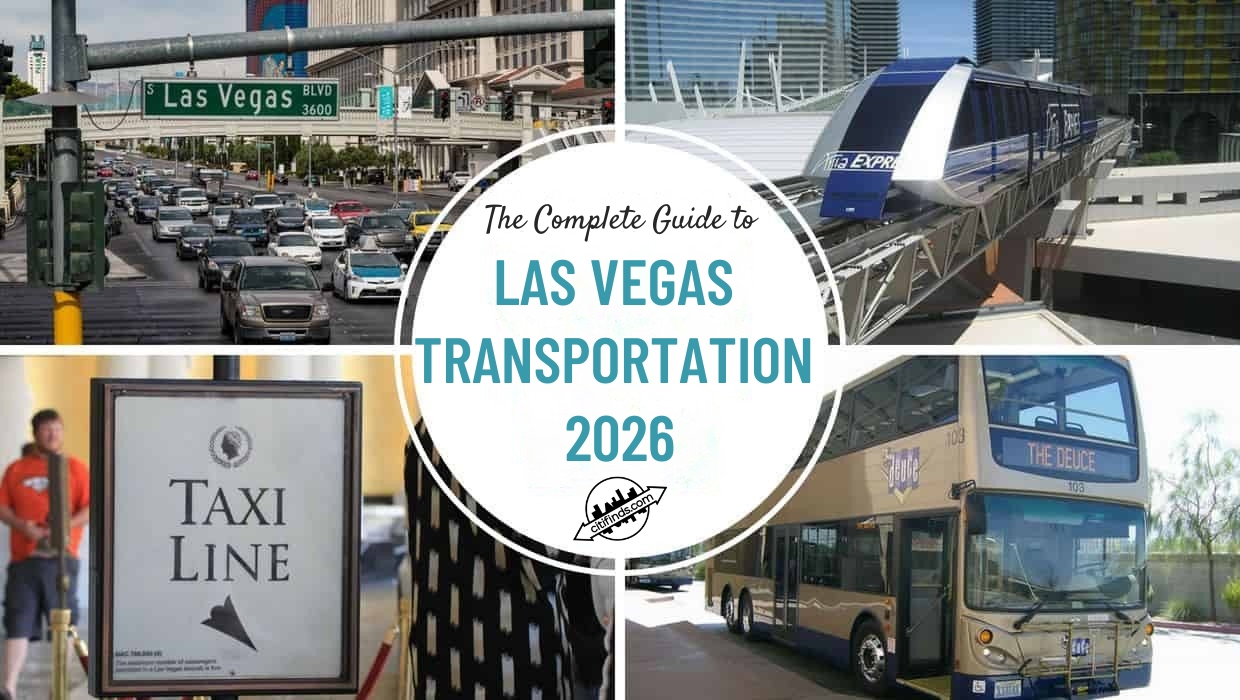
Las Vegas in 2026 is more connected than ever, but getting
around the city can be overwhelming for first-time visitors. From the moment
you land at Harry Reid Airport to navigating the famous Las Vegas Strip and
beyond, your transportation choice directly impacts your budget, time, and
overall experience.
Whether you're using rideshare apps like Uber or Lyft,
taking the Las Vegas monorail, catching a traditional taxi, booking an airport
shuttle, or renting a car, each option has distinct advantages and trade-offs.
This comprehensive guide breaks down every transportation method available with
real pricing, detailed pros and cons, and insider tips you won't find in
typical travel blogs.
Whether you're traveling solo, with family, or in a large
group, we'll help you pick the smartest way to move around Las Vegas without
overspending or wasting hours in traffic. By the end of this Vegas
transportation guide, you'll have a clear action plan for your entire trip.
AI-Powered Transportation Cost
Calculator: Compare Your Options in Real-Time
One of the biggest challenges for Las Vegas visitors is
comparing costs across different modes of transportation. Distance, time of
day, surge pricing, and vehicle type all factor into your final bill. Rather
than guessing, use this framework to calculate your exact Vegas transportation
costs before you arrive.
How This Tool Works:
The most reliable method is to input your specific routes into Uber, Lyft, and taxi rate calculators. For example, Harry Reid Airport to MGM Grand typically costs between $25-$50 via rideshare during normal hours, but can spike to $80+ during peak times. Compare this to an airport shuttle ($15-20), the Las Vegas monorail (which doesn't directly serve the airport but connects to other areas), or rental car costs ($40-60/day plus parking).
Save Money Instantly:
Book early-morning rides (6-9 AM) for the lowest rates.
Avoid Friday-Saturday surge pricing. Use airport shuttles for one-way trips to
your hotel. Split Uber costs with other passengers headed the same direction.
These strategies alone can save $100+ on a week-long Vegas trip.
Airport to Strip: The Complete Route
Breakdown
Getting from Harry Reid Airport to the Strip is your first
major transportation decision, and it sets the tone for your entire Vegas
experience.
Harry Reid Airport to the Strip
(Distance & Options)
Harry Reid International Airport sits approximately 5 miles
southeast of the Las Vegas Strip. Despite this short distance, your
transportation options vary dramatically in cost, convenience, and time. The
drive typically takes 15-25 minutes, depending on traffic, time of day, and
which Strip location you're heading to.
Rideshare (Uber/Lyft): Cost, Time & Tips
Uber and Lyft are the most popular Las Vegas transportation
options for airport transfers, accounting for a significant portion of ground
transportation. A typical Las Vegas Uber fare from the airport to the Strip
ranges from $28 to $45 during normal hours (9 AM - 4 PM weekdays). However,
surge pricing can push costs to $65-$85 during peak times.
Timing Matters
Significantly: Arrive during late afternoon (4-7 PM) or early evening
(after 10 PM) to avoid peak surge. Lyft occasionally offers cheaper rates than
Uber due to less demand. During your Vegas trip, consider using rideshare for
your airport arrival and departure, then explore other options for moving
around the Strip.
Pro Tip: Request
the ride 30 minutes before you're ready at baggage claim. This reduces wait
time and prevents surge pricing from climbing further. How much does Uber cost
in Vegas? Shorter Strip-to-Strip rides run $8-$15, while airport-to-downtown
rides cost $20-$35.
Taxi: Traditional Option Explained
Las Vegas taxis operate on metered rates set by the city.
Airport-to-Strip taxi rides typically cost $25-$40, depending on the exact
destination and traffic conditions. Taxis provide a predictable, regulated
experience with no surge pricing surprises.
Advantages:
Regulated fares, direct routes, no app required, reliable for large groups.
Disadvantages: Longer wait times (15-30 minutes), less convenient than
rideshare, fixed routes only.
Monorail: Direct Route Pros &
Cons
The Las Vegas monorail doesn't serve Harry Reid Airport
directly, which surprises many visitors. However, it's a game-changer once you
reach the Strip. The monorail connects major casinos and resorts along the
Strip corridor, offering a swift alternative to walking or ridesharing for
shorter distances.
Monorail Pricing:
Single ride ($5-8), day pass ($20), multi-day pass ($50+). The monorail covers
major Strip hotels, including MGM Grand, Caesars Palace, and the Venetian,
making it ideal for Vegas tourism within the hotel corridor.
Best For: Moving
between Strip hotels, avoiding traffic congestion, quick hops to nearby
attractions. Worst for: Airport arrival/departure, downtown or Off-Strip
destinations.
Rental Car: When It's Worth It
Renting a car in Las Vegas makes sense only if you're
planning multiple day trips (Red Rock Canyon, Hoover Dam, Valley of Fire) or
staying longer than 4-5 days. Daily rental rates range from $40 to $70, depending
on vehicle type and season.
Hidden Costs:
Parking fees at Strip hotels average $15-$25/day (sometimes free at Off-Strip
casinos). Fuel adds $20-$30. Valet parking can exceed $30/day. Insurance
increases costs further.
Calculate Before
Committing: If your total rental + parking + fuel + insurance exceeds
$200-250, consider rideshare and guided tours instead. Many visitors overpay for
rental cars they never use.
Airport Shuttle: Budget Option
Airport shuttle services offer the cheapest Las Vegas
airport transportation at $15- $20 per person, one-way. Shuttles run on
scheduled routes, stopping at major hotels. Wait times typically range from 20
to 45 minutes.
Best for: Budget
travelers, solo visitors, anyone willing to trade time for savings. Worst for:
Time-sensitive arrivals, large groups (becomes expensive), luggage storage
concerns.
Getting Around the Las Vegas Strip
Itself
Once you reach your hotel, strip movement becomes your
primary challenge.
Walking the Las Vegas Strip
(Distance Reality Check)
The Las Vegas Strip spans 4.2 miles, a distance that seems
manageable until you're dragging luggage under the desert sun. Walking
end-to-end takes 60-90 minutes, depending on pace and stops. Tourists
dramatically underestimate this distance, leading to exhaustion and missed
attractions.
Walking Smart:
Break the Strip into three zones (south, central, north). Spend full days in
one zone. Wear comfortable shoes. Start early to avoid afternoon heat. Walk
from MGM Grand to Bellagio to Caesars (central Strip) on day one, then explore
north toward the Stratosphere or south toward Mandalay Bay on separate days.
Monorail: Best for Strip-to-Strip
Travel
The Las Vegas monorail is genuinely the best way to travel
along the Strip. Stations stop directly at major hotels. Trains arrive every
3-4 minutes. A day pass ($20) pays for itself after just 3 rides.
Monorail Stations:
MGM Grand, Bally's/Paris, Flamingo, Harrah's/The LINQ, Westgate, Las Vegas
Convention Center. This corridor covers most major attractions and
entertainment venues.
Free Trams Between Resorts
Several casino resorts offer free internal transportation.
The tram connecting Bellagio to Park MGM operates continuously. Luxor offers a
tram to Excalibur and Mandalay Bay. These free services connect themed
properties, extending your walkable range without cost.
Strategy: Use
free trams to connect nearby properties. Walk within hotel properties. Use
monorail for longer Strip distances. This hybrid approach minimizes costs while
maximizing comfort.
Rideshare on the Strip (Surge
Pricing Alert)
Uber and Lyft operate throughout the Strip, but surge
pricing is severe during peak hours (5-10 PM, especially Thursday-Saturday). A
normally $8 ride becomes $25+.
When Rideshare Makes
Sense: Late-night club runs (midnight-4 AM), avoiding walking in poor
weather, traveling with a large group, luggage scenarios.
Vegas Loop: The New 2026 Transit
Option
The Vegas Loop underground transit system connects the Las
Vegas Convention Center via underground tunnels. This innovative system
operated by the Boring Company offers a futuristic transportation experience
specifically designed for convention attendees and nearby hotel guests.
Vegas Loop Details:
Three underground stations, vehicles seat 8-10 passengers, and operate
continuously throughout the day. Fares are comparable to monorail pricing. This
represents the future of Las Vegas transportation infrastructure, with
expansion planned for the Strip and downtown.
Beyond the Strip: Day Trips &
Local Travel
Red Rock Canyon (30 min from Strip)
Red Rock Canyon sits just 30 minutes west of the Strip,
offering dramatic desert scenery, hiking trails, and scenic drives. Rent a car
or book a guided tour. Rideshare costs approximately $35-$55 depending on surge
pricing.
Best Option:
Guided tour ($80-150 per person) includes transportation, knowledge, and
hassle-free navigation. For road-trippers with rental cars, the scenic loop
drive is spectacular.
Hoover Dam (45 min from Strip)
The iconic Hoover Dam is 45 minutes southeast of the Strip.
Self-driving allows free exploration and photo opportunities. An Uber from the
Strip to the Hoover Dam costs $40-$65, depending on time/surge pricing.
Combination Trip:
Visit Hoover Dam, then continue to Valley of Fire or Lake Mead. Rental car
becomes more economical when combining multiple destinations.
Valley of Fire (60 min from Strip)
Valley of Fire State Park's red rock formations lie 60
minutes northeast of Las Vegas. Accessible only by personal vehicle (rental car
recommended). Park entrance costs $10. Trails and scenic views are free.
Planning: Plan a
full day, pack water, start early to avoid afternoon heat. Guided tours
available through Vegas tour operators ($100-150).
Rental Car vs Tours for Day Trips
·
Choose a rental car if: Visiting multiple
destinations, traveling with family, staying 4+ days, budget under $250.
·
Choose a guided tour if: First-time visitor,
prefer guided education, want hassle-free transportation, traveling solo or as
a couple.
Most day-trippers find guided tours more valuable despite
the higher per-person cost. Expert commentary, optimized routes, and included
transportation justify the premium.
Pricing Breakdown 2026: Real Costs
Compared
Uber/Lyft Average Fares
|
Route |
Normal Hours |
Peak Hours |
|
|
|
|
|
Airport to Strip |
$28-$45 |
$65-$85 |
|
Strip to Strip (1 mile) |
$8-$15 |
$20-$35 |
|
Strip to Downtown |
$18-$25 |
$40-$60 |
|
Strip to Red Rock |
$35-$55 |
$70-$100 |
Taxi Rates & Surcharges
Metered rates start at $3.30 per mile, then $2.75 per mile.
Airport surcharge adds $2.00. No surge pricing. Expect Las Vegas taxi rates of
$25-$40 for airport-to-Strip trips.
Monorail Passes (Single, Day,
Multi-Day)
·
Single ride: $5-$8
·
24-hour pass: $20
·
72-hour pass: $50
·
Annual pass: $300+ (locals only)
Bus Passes (The Cheapest Option)
Clark County transit buses cost $2.50 per ride or $20 for a
7-day pass. Buses cover the entire valley but run less frequently than the
monorail. Travel times are longer (30-60 minutes for Strip routes).
Best for:
Budget-conscious travelers, Off-Strip exploration, accessing local
neighborhoods.
Rental Car Daily Rates
Standard sedan: $40-$70/day. SUV: $60-$90/day. Luxury:
$100+/day. Compact: $35-$50/day. Add $15-$25 daily parking at Strip hotels,
plus $20-$30 fuel for moderate use.
Transportation by Visitor Type
Solo Travelers (Safest & Budget
Options)
Only travelers benefit from rideshare safety (tracked
routes, rating systems) and affordable shared transportation. Best practices:
Use Uber/Lyft during the day, avoid walking alone late at night, explore the
public monorail, consider group tours for day trips.
Couples (Romantic Transport Ideas)
Couples enjoy flexibility. Rent a car for a Red Rock Canyon
sunset drive or use the monorail for a romantic dinner hop. Las Vegas for
couples works best with a mix of transportation methods, depending on the activity.
Families with Kids (Safety &
Convenience)
Families need reliable, predictable transportation. Monorail
is ideal for families (kids ride free with parents). Rental cars provide
flexibility for multiple destinations. Avoid surge-priced rideshare when possible.
Large Groups (Cost-Splitting
Strategy)
Groups of 6+ benefit from charter buses or van rentals. One
larger vehicle beats multiple rideshares due to shared costs. Plan
transportation together rather than independently.
Local Secrets: How Vegas Residents
Actually Move Around
Skip These Tourist Traps
Locals avoid Strip walking, monorail single rides (too
expensive per use), and airport shuttles (slow and inefficient). They walk
strategically within zones, use their own vehicles, and rely on rideshare
during peak times.
Best Time to Travel (Avoid Peak
Hours)
Vegas rush hour peaks at 7-9 AM and 4-7 PM on weekdays.
Friday-Saturday nights’ show extreme surge pricing (5-11 PM). Travel 9 AM-4 PM
weekdays for the cheapest, most reliable service. After midnight, surge prices
drop significantly.
Hidden Parking Hacks
Downtown casinos offer free parking. Off-Strip casinos
provide free parking. Downtown transportation is cheaper overall. Locals avoid
Strip hotels for parking costs. Some parking garages offer 3 hours free with
validation
Frequently Asked Questions (FAQs)
FAQ 1: Is It Safe To Use Rideshare Apps Late At
Night In Las Vegas?
Yes, Uber and Lyft are generally safe due to driver ratings,
in-app tracking, and accountability features. However, exercise standard
precautions: share trip details with friends, confirm driver information before
entering, and sit in the back seat. Las Vegas rideshare systems rank among the
safest in the nation due to high volume and regulation.
FAQ 2: Do I Need To Rent A Car In Las Vegas?
No, most visitors don't need rental cars. Strip-focused
travelers can get around by walking, the monorail, and occasional rideshare.
Rental cars become necessary only for multiple-day trips or for staying 5+ days
to explore beyond the Strip.
FAQ 3: What's The Cheapest Way To Get From Airport
To Hotel?
The airport shuttle ($15-20) is the cheapest but slowest
option. The monorail combo (shuttle to the connection point, then monorail) is
cheap if you're staying on the monorail route. Shared Uber/Lyft with other
passengers beats solo rideshare. Book a rideshare during off-peak hours (early
morning) for the lowest rates.
FAQ 4: Can I Use Google Maps for Vegas Transportation?
Google Maps works exceptionally well for Las Vegas
transportation. It shows monorail routes, bus schedules, walking times, and
rideshare estimates. Download offline maps before arrival, as data networks can
get congested during peak times.
Final Words: Your Vegas
Transportation Action Plan
Book a rideshare 30 minutes before baggage claim at Harry
Reid Airport during non-peak hours. For Days 2-4, purchase a 24-hour monorail
pass; it pays for itself after 3 rides. Walk strategically within zones, use
free trams between properties, and reserve rideshare for late-night runs only.
From Day 5 onward, rent a car for day trips to Red Rock Canyon and Hoover Dam,
or book guided tours instead.
Save money by choosing monorail passes over single rides,
walking distances under one mile, traveling 9 AM-4 PM to avoid surge pricing,
and using airport shuttles for one-way trips. These tactics save $100-200 on a
week-long Vegas trip without sacrificing convenience.
Start with this transportation strategy, and you'll save
money, reduce stress, and enjoy the city for the right reasons: amazing shows,
great food, and incredible experiences. Ready to book? Download our complete
Vegas travel checklist or explore our Las Vegas hotels guide today.

Joseph
Joseph is a Lake Las Vegas local who enjoys attending and sharing updates about events in the area. Through detailed blog posts, he helps the community stay informed and makes it easy for people to find event details. Joseph also welcomes others to contribute content, creating a space for everyone to enjoy the vibrant events of Lake Las Vegas.